
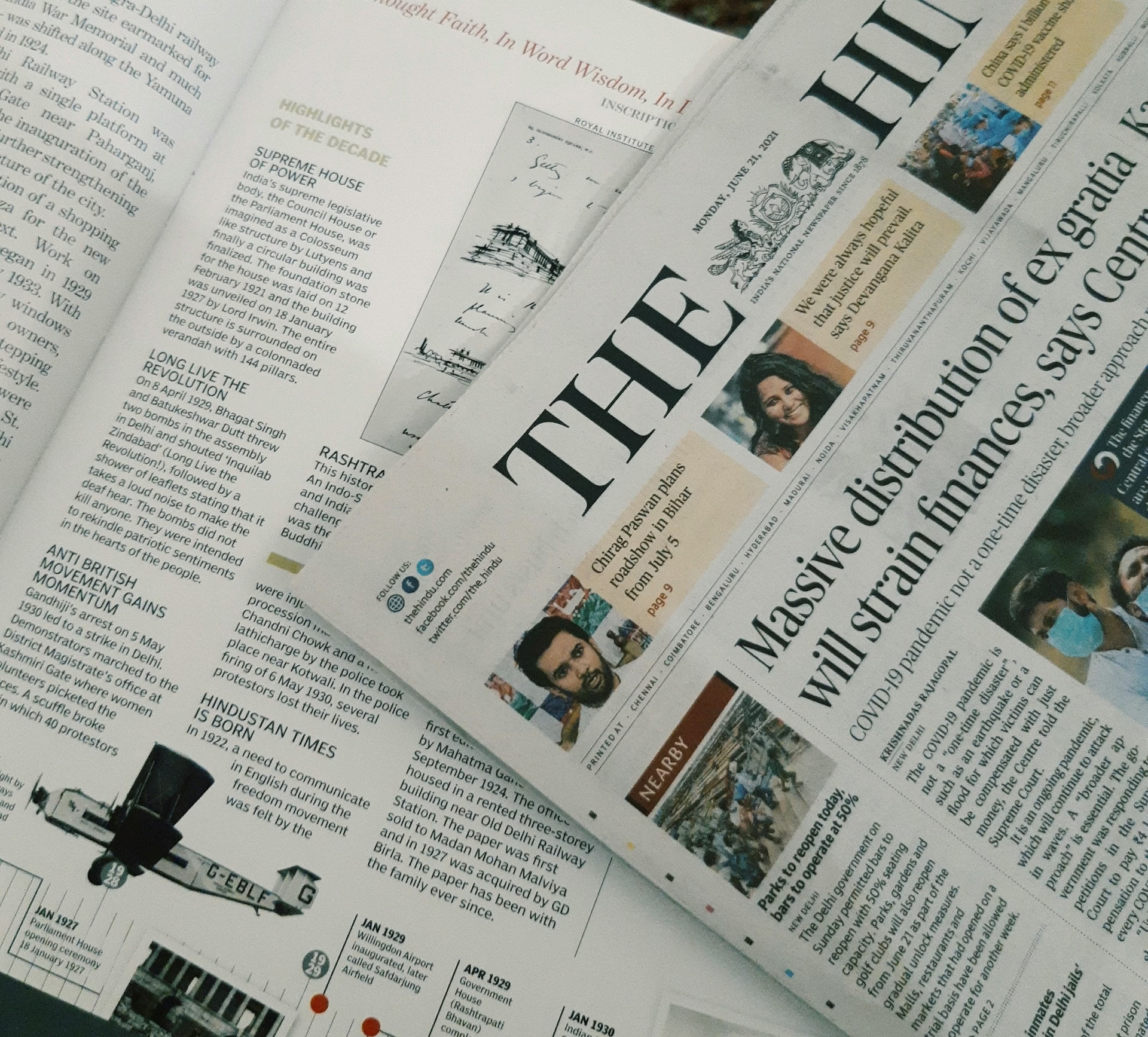
A newspaper has something most businesses spend years trying to earn. They have an audience that already expects it to be credible. The Reuters Institute’s Digital News Report for 2026 found that overall trust in news has fallen to 37 percent worldwide, the lowest since the survey began in 2015. In Nigeria, reported trust sits far higher, at 68 percent. That is a genuine advantage, and it is exactly the kind of advantage search engines try to measure.
The same report describes a shift in how people reach the news. Access through third parties such as search, social platforms, and increasingly AI chatbots now outweighs direct visits to publishers’ own sites. Roughly 10 percent of respondents use AI chatbots for news weekly, up from 7 percent a year earlier, and chatbot users are less likely to click through to the source.
For an online newspaper, being discoverable and being clearly identifiable as the source are now two separate problems. This guide explains what SEO for online newspapers involves, the practices that matter most, and a practical strategy for putting them in order.
How SEO for Online Newspapers Differs From Standard SEO
News SEO shares its foundations with ordinary SEO, but three differences change how a newsroom should work.
1. Freshness and Authority Compete for the Same Slot
An evergreen guide can rank for years. A news story has a short window during which it is most valuable. Consequently, speed of indexing matters as much as quality. At the same time, search engines tend to favor publishers with an established record of covering a particular topic or region, so a fast story from an unknown source often loses to a slightly later one from a trusted beat reporter. Speed gets a story considered. Authority decides whether it is chosen.
2. Where News Is Actually Discovered
Readers meet news in several places: standard search results, the Top Stories carousel, the News tab and Google News, Google Discover, and now AI answers. In July 2026, Search Engine Land reported that Google had begun showing Top Stories carousels inside AI Overviews for some US queries, a sign that timely journalism is being integrated into AI-generated results. A newspaper’s SEO has to serve all of these surfaces, not only the blue links.
3. Trust Is the Currency
The Digital News Report found that only 32 percent of people trust news found through search engines and 20 percent trust news delivered by AI chatbots, both well below trust in news overall. Readers still look to the original publisher to confirm what is true. Source credibility research, beginning with Hovland and Weiss in the early 1950s, shows that people judge a message largely by the perceived expertise and trustworthiness of its source. Each best practice below is a way of making that source visible and verifiable to both readers and machines.
SEO Best Practices for Online Newspapers
The fourteen practices below are grouped in the order a newsroom would typically apply them. These range from editorial foundations (1 to 5), to technical foundations (6 to 10), and then visibility and growth (11 to 14).
1. Use Verifiable Author Bylines
A byline is the simplest credibility signal a newspaper has, and one of the most often wasted. Google’s guidance on helpful content asks publishers to be clear about who created a piece of content, how it was produced, and why. A real, named author answers the first question directly and supports the Experience, Expertise, Authoritativeness, and Trustworthiness framework that quality raters use, particularly for news where accuracy affects decisions.
A byline is verifiable when anyone can confirm the person exists, writes on this subject, and has a record. In practice, that means:
- A real name used consistently across every article
- A dedicated author page linked from each byline, with a short biography stating the reporter’s beat and background
- A list of published work visible or filterable on that page
- Professional contact or profile links, such as an editorial email and recognized social or professional profiles
- A stable URL that survives site redesigns
Author pages work as entity hubs. Marking them up with Person schema, listing the topics the reporter covers, and connecting them to external profiles lets search engines and AI systems recognize that one reporter wrote dozens of stories on the same subject. That repeated association is what turns a byline into topical authority.
Not every story has a single reporter. Attribute wire and agency copy clearly to its source, name the responsible editor on combined staff reports, and explain sourcing standards on a policy page when anonymity is needed. If AI tools assisted the work, a short honest disclosure fits Google’s emphasis on explaining how content was made. What damages credibility is the generic byline that hides who is accountable.
2. Publish Editorial Standards and Transparency Pages
Author pages work best when the publication itself is transparent. A clear About page, ownership information, an editorial standards statement, a corrections policy, and visible contact details all reinforce the signal that this is a real, accountable newsroom. These pages are also among the first places quality evaluators and AI systems look to decide whether a publisher can be trusted.
3. Write Headlines With Search Intent in Mind
Headlines are where editorial judgment and search intent meet. Handled badly, SEO turns them into keyword strings. Handled well, it makes good headlines easier to find.
Treat headline, title tag, and social headline as different jobs
The on-page headline (H1) speaks to a reader already on the site. The title tag appears in search results and has limited space, so it benefits from front-loading the key subject. The social headline is written for a feed. They can differ, provided each is accurate and none misleads.
Use information scent without the clickbait.
Information foraging theory, developed by Pirolli and Card, describes how people follow “information scent,” the cues that suggest a link will lead to what they want. A headline with strong scent names the subject, the place, and the development clearly. George Loewenstein’s information gap theory explains why teasers earn clicks: curiosity arises when people notice a gap between what they know and want to know. A gap with no payoff reads as clickbait, which erodes trust and runs against Google’s guidance for Discover. Create curiosity the story actually satisfies.
You can follow a few practical rules:
- Lead with the subject people would search for, including names, places, and institutions
- Be specific, since numbers, dates, and concrete developments outperform vague summaries
- Use plain language that matches how readers phrase the question
- Keep title tags concise, since long ones are truncated in results
- Avoid keyword stuffing, because an awkward headline fails readers and weakens trust
- Update headlines on developing stories, with a visible note where the change is significant
- Never trade accuracy for ranking, and let an SEO suggestion that distorts the story lose
Build the check into the workflow
The most reliable approach is a light review at the point of editing. An editor or audience specialist checks the headline, title tag, summary, author link, and category before publication. The aim is to inform editorial judgment, never to replace it.
4. Own a Beat to Build Topical Authority
General news sites compete with every other general news site. A newspaper that becomes the best source on a defined subject competes in a much smaller, more winnable arena. Michael Porter’s focus strategy argues that a firm can outperform larger rivals by serving a narrow segment better than anyone else.
In search, the equivalent is topical authority. Repeated, high-quality coverage of one subject signals that a publisher is a reliable authority on it. Analysis of news SEO consistently notes that Google favors publishers with an established record on specific topics or regions, such as a local outlet that has covered city politics for years.
A beat is also a keyword cluster waiting to be organized. A newspaper focused on Lagos transport and infrastructure, for example, naturally produces several layers of content:
- Breaking and developing stories, which capture timely, high-volume queries
- Explainers, which capture evergreen questions about how things work
- Data and investigations, which earn links and citations
- Profiles and follow-ups, which build associations with people and institutions
Keyword research for a beat should identify the questions each layer answers, including long-tail phrases that large general outlets overlook. Narrow queries have less competition and often higher intent.
Pair beats with beat reporters. When a reporter’s byline, author page, and beat hub reinforce one another, the entity relationship is clear: this person covers this subject for this publication. Rotating reporters across unrelated topics weakens that signal. A good beat sits where audience demand, editorial capability, and weak competition overlap, whether that is a region, an industry such as fintech or energy, or a community underserved by national outlets.
5. Build Hub Pages and Balance Breaking News With Evergreen Content
A beat hub is a page that collects and organizes everything the newspaper has published on a subject: a short orientation, the latest stories, key explainers, timelines, and a glossary. New stories link up to the hub, and the hub links down to them. This structure tells search engines which pages belong together and which page is the authority, and it gives readers an obvious place to start.
Breaking news earns attention for hours. Evergreen explainers, timelines, and “what you need to know” pages earn it for years. A healthy newspaper publishes both, and uses the evergreen layer to catch the readers that breaking stories send in search of background.
6. Implement NewsArticle Schema With Author Markup
NewsArticle structured data tells search engines what a page is, who wrote it, and when. Include the headline, images, publication and modification dates, the author linked to their author page, and the publisher.
The markup should always mirror what readers see on the page, and the modification date should change only when a story is substantively updated. For stories that unfold over hours, LiveBlogPosting schema is designed for live coverage.
7. Use a News Sitemap and Push Indexing Quickly
A Google News sitemap lists recently published articles, typically those from the last two days, to help crawlers discover them quickly. Alongside it, IndexNow can push new and updated URLs to Bing, which matters because ChatGPT search relies substantially on Bing’s index. Fast discovery is the difference between a story appearing while it is still news and appearing after the moment has passed.
8. Optimize Page Speed and Mobile Experience
Most readers arrive on phones, often on variable connections. Heavy advertising scripts, oversized images, and slow templates damage the reading experience and the page experience signals search engines measure. Treat page performance as an editorial concern, because a story nobody can load is a story nobody reads. Control advertising weight, reserve space to prevent layout shifts, compress images, and test on mid-range devices rather than only on fast office connections.
9. Optimize Images, Video, and Multimedia
Original photography and video are strong differentiators and strong trust signals. Use descriptive file names and alt text, include credits and captions, serve appropriately sized images, and embed video with a transcript or summary where possible. Large, high-quality images also matter for Discover, which Google’s guidance says favors images at least 1,200 pixels wide with large image previews enabled.
10. Maintain Your Archive: Updates, Corrections, and Canonicals
An archive is an asset when it is maintained. Update evergreen explainers, fix outdated facts, and add visible corrections. Use canonical tags where the same story appears in more than one place, such as syndicated or republished copy. If the newspaper publishes in more than one language, such as English and Yoruba, Hausa, Igbo, or Pidgin, declare the language of each page and connect parallel versions properly. Search engines and readers both trust a newspaper that corrects itself openly.
11. Earn Links and Citations Through Original Reporting
Links and mentions remain a core authority signal, and journalism is unusually well placed to earn them. Original reporting, exclusive data, investigations, and expert commentary give other sites and other newsrooms a reason to cite you. Make that easy by publishing data in clear tables, attributing sources, and promoting standout work to relevant communities. Label sponsored content clearly and use the appropriate link attributes for paid placements so editorial credibility is not diluted.
12. Optimize for Top Stories, Google News, and Discover
Each surface has different requirements:
- Google News and Top Stories. Google’s guidance is that eligible content from publishers following its policies is considered automatically, with Publisher Center available to manage how a publication appears. Eligibility rests on content quality, freshness, clear authorship, and accessible, fast pages rather than special markup.
- Discover. This feed favors timely, original content with strong imagery and punishes misleading headlines. It rewards publishers that readers already trust.
Because Discover and Top Stories traffic arrives in bursts, build the site to handle spikes and design landing pages that invite readers to explore related coverage.
13. Make Your Reporting Easy for AI Answers to Cite
Chatbots are still a small share of news use. The Digital News Report found that only about 1 percent of people say AI is their main source of news. The direction matters, though, and the reported reluctance of chatbot users to click through means citation and brand recognition carry growing weight. Write clear, factual ledes that state the key information in the opening lines, keep authorship, dates, and sourcing explicit, and maintain strong entity signals through author and organization markup. Decide deliberately which AI crawlers to allow, since that is a commercial and editorial choice. A publication that blocks every AI crawler also removes itself from retrieval-based answers.
14. Measure What Matters
Search Console reports performance by search type, including web, news, and Discover, and the newsroom should read it by beat and by author, not only by sitewide totals. Useful questions include which beats gain impressions over time, which reporters’ pages earn the most search traffic, which headlines achieve strong click-through rates, and how much referral traffic now arrives from AI assistants. Measurement turns SEO from a set of guesses into feedback the newsroom can act on.
A Practical SEO Strategy for Online Newspapers
Fourteen practices are easier to manage in phases than all at once.
Phase 1: Fix the Foundations (First 30 Days)
Audit crawlability and indexing, confirm the site is in both Google and Bing Webmaster Tools, deploy NewsArticle schema and a news sitemap, replace generic bylines with named, linked authors, and publish the transparency pages. These changes are largely technical and administrative, and they remove the barriers that would otherwise limit every later effort.
Phase 2: Build Editorial Habits (Days 30 to 90)
Introduce the light SEO check into the editing workflow, choose two or three beats to own, assign reporters to them, and create the first hub pages. Set a rhythm of breaking coverage supported by evergreen explainers on each beat.
Phase 3: Compound Authority (Day 90 Onward)
Expand hubs and archives, invest in original data and investigations that earn links, track results by beat and author, and refine headline practice based on click-through data. Authority in a beat builds over months, so consistency matters more than intensity.
The Bottom Line
SEO for online newspapers comes down to making existing credibility legible. Verifiable bylines turn reporters into recognized entities. Search-aware headlines help good journalism get found without distorting it. A well-defined beat concentrates authority in a subject where a newspaper can genuinely win. Sound technical foundations carry all of it to readers, search engines, and AI systems quickly and accurately.
As a top-rated SEO agency in Nigeria, we work with publishers to help them get discovered faster and more easily. If you run or are building an online newspaper and want to know where your search foundations stand, we are happy to help you work it out.
Frequently Asked Questions
What is SEO for online newspapers?
SEO for online newspapers is the practice of optimizing a news site so its stories are discovered across search results, Top Stories, Google News, Discover, and AI answers. It combines standard SEO with news-specific elements such as NewsArticle schema, news sitemaps, verifiable authorship, and strong topical focus.
What are the best practices for news SEO?
The most important practices are verifiable author bylines, transparent editorial standards, search-aware headlines, owning a beat, hub pages, NewsArticle schema, a news sitemap, fast mobile pages, original multimedia, maintained archives, earned links, and measurement by beat and author.
Why do author bylines matter for news SEO?
Bylines identify who is accountable for a story. Linked to author pages with bios, beats, and published work, they supply the experience and trust signals that support E-E-A-T and help search engines connect a reporter with a subject.
Should newspaper headlines be written for search engines?
Headlines should be written for readers first, with search intent informing them. Naming the subject clearly, being specific, and matching the way people phrase questions helps discoverability without keyword stuffing or clickbait.
What does it mean to own a beat for SEO?
Owning a beat means concentrating coverage on a defined subject or region so consistently that search engines treat the publication as an authority on it. It lets a newspaper compete for more specific keywords instead of fighting larger outlets across every topic.
How do I get a news website into Google News and Top Stories?
Google’s guidance is that eligible content from publishers following its policies is considered automatically. Focus on original, timely reporting, clear authorship, transparency pages, NewsArticle schema, a news sitemap, and fast mobile pages, and use Publisher Center to manage how the publication appears.
Do online newspapers need a news sitemap?
For publishers that post frequently, a Google News sitemap helps crawlers find new articles faster and is recommended alongside a regular XML sitemap. It should list recent articles and be updated continuously.
How can a newspaper appear in AI answers like ChatGPT?
Maintain clear, factual reporting with explicit authorship and dates, strong entity signals through author and organization markup, and crawler access for the systems you want to be cited by. Being indexed in Bing also matters for ChatGPT search.
How long does news SEO take to work?
Technical fixes can show effects within weeks, while topical authority on a beat typically builds over months. Consistent coverage and measurement are the best guide.