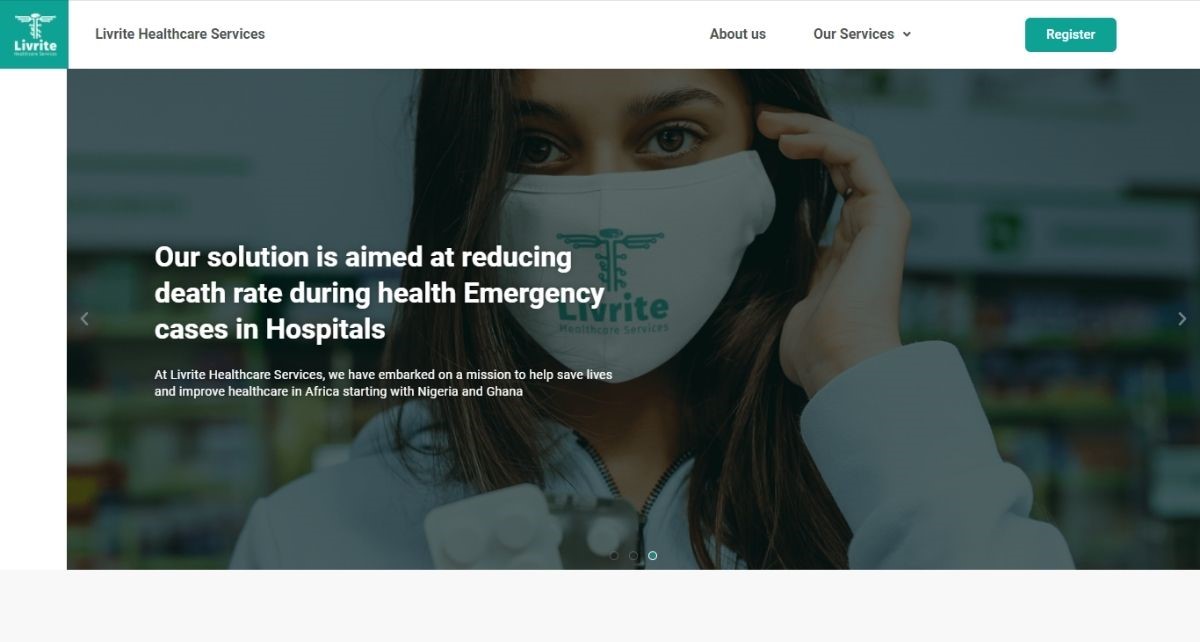

A founder decides to take their business online. They review their budget and decide that hiring a professional development agency is too expensive. Instead, they visit a marketplace, purchase a pre-built website template for use and hire a freelancer to swap the generic text with their own company information.
The site goes live. It looks relatively acceptable on a desktop computer. The founder feels brilliant for saving hundreds of thousands of Naira on development costs.
Then, they start running digital advertisements. They pour money into Facebook and Google, driving thousands of potential buyers to their newly launched platform. The clicks register on the dashboard, but the bank account remains empty. The conversion rate sits at an abysmal zero point two per cent.
The founder immediately blames the advertising algorithm. They assume the traffic is bad or the market is simply too difficult.
They are diagnosing the wrong problem. The traffic is fine. The market is ready to buy. The actual problem is the template website.
In a highly competitive environment, your website can affect your sales significantly. Every time you cut costs on your web design, you may just be costing yourself returns. This comprehensive guide completely dismantles the illusion of cheap web development. We will explore exactly how pre-built themes destroy your sales pipeline and why investing in custom web design in Nigeria is the only mathematical way to achieve a high return on your advertising spend.
The Illusion of the Pre-Built Theme
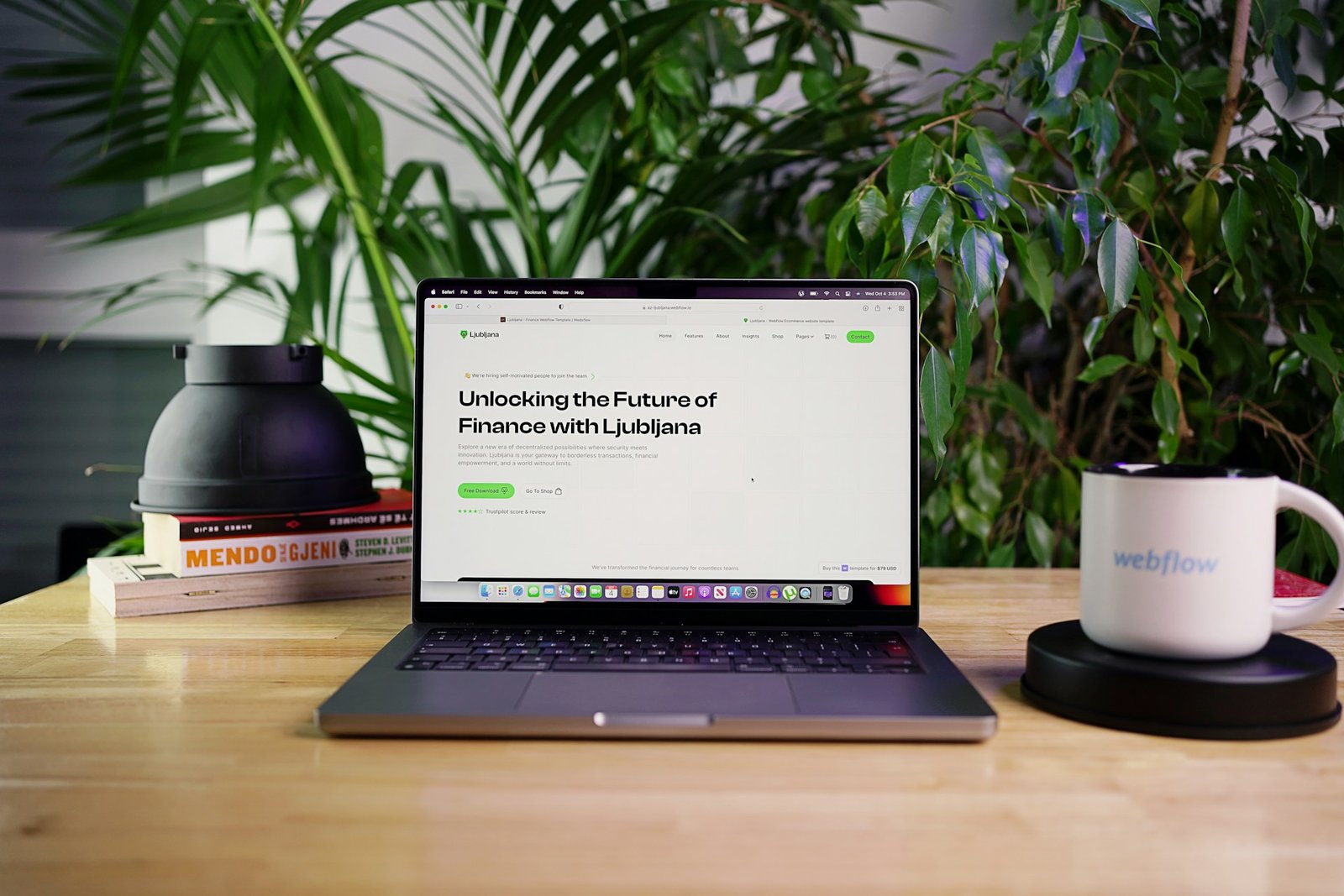
To understand why template websites fail, you must understand exactly how they are manufactured.
When a developer builds a commercial theme to sell on a global marketplace, their goal is to sell that exact same theme to ten thousand different people. To achieve this massive sales volume, the theme must appeal to a corporate law firm in London, a fashion boutique in Lagos, and a real estate agency in Dubai simultaneously.
To accommodate all these vastly different industries, the developer packs the template with hundreds of different features. They include complex image sliders, massive portfolio galleries, dynamic pricing tables, and intricate animation scripts.
You buy this theme for your simple logistics company. You only need about five per cent of those included features. However, the code for the remaining ninety-five per cent of those unused features still exists in the background of your website.
This structural reality creates a cascade of technical and psychological failures that actively prevent the Nigerian consumer from giving you their money.
Cons of a Template Website
1. Slow Loading Speed
The most immediate consequence of using a bloated, feature-heavy template is severe loading delays.
Every time a user clicks your link, their browser must download all the background code, even the scripts you are not actively using. In a controlled environment with fibre-optic internet, this massive data download happens quickly.
However, your target audience is not sitting in a controlled environment. They are sitting in Lagos traffic, browsing on a mid-range smartphone, relying on a fluctuating mobile network. When their device attempts to load your bloated template, the browser freezes. The screen remains white for four, five, or sometimes eight seconds.
Modern consumers have absolutely zero patience for slow technology. If a page takes longer than three seconds to load, over fifty percent of your mobile visitors will abandon the session entirely. They will hit the back button and click on your competitor instead.
You paid Google or Meta for that click. The user showed high purchasing intent. But because you tried to save money on development, your slow template essentially took your advertising budget and set it on fire.
Professional custom web design in Nigeria eliminates this speed penalty. When an agency builds a bespoke platform, they write clean, lightweight code that only includes the exact features your business requires. There is no bloat. The site loads instantaneously, capturing the user before they have the opportunity to lose interest.
2. Trust Deficit
The Nigerian consumer market is characterised by intense scepticism. Due to the high prevalence of internet fraud and substandard service delivery, buyers are naturally highly defensive. They look for any possible reason to disqualify a vendor before making a financial commitment.
Trust is evaluated visually within the first three seconds of landing on a webpage.
When you use a popular template, your website looks exactly like thousands of other websites on the internet. It relies on rigid grid structures and generic layouts that scream cheap. The spacing often looks slightly awkward because you forced your specific brand messaging into boxes designed for completely different content.
Corporate procurement officers and high-net-worth individuals notice these visual inconsistencies immediately. When they see a generic layout, they subconsciously register your company as a low-level operation. They assume that if you cannot afford to build a proper digital headquarters, you probably lack the financial stability and operational capacity to handle their major contracts.
A high-converting platform requires absolute visual authority. It requires bespoke typography, custom iconography, and a layout engineered specifically around your unique brand identity. You cannot purchase authority for forty dollars. You must engineer it from the ground up.
3. The Shift to Mobile-First Architecture
Every mass-produced template proudly advertises that it is fully mobile-responsive. Founders read this feature and assume their mobile users will receive a perfect browsing experience.
This is a massive misunderstanding of modern technical standards.
Responsive design is actually an outdated methodology. It simply means a developer built a desktop website first, and then added code instructing the elements to shrink and stack on top of each other when viewed on a smaller screen. When a complex template website design automatically stacks its elements, the resulting mobile page is often a disaster. The user has to scroll past massive, irrelevant hero images just to find the purchase button. The navigation menu becomes a confusing maze of tiny, unclickable links.
In Nigeria, over eighty per cent of all internet traffic originates from mobile devices. If you treat mobile as an afterthought by simply relying on responsive stacking, your business will fail.
The current industry standard is mobile-first architecture. When you invest in custom web design in Nigeria, professional developers reverse the traditional process. They design and engineer the smartphone experience before they even consider the desktop layout. They built the interface specifically for touch interactions. They engineer the placement of every single button to ensure it sits perfectly within the natural thumb reach of the user. By prioritising mobile-first architecture, they eliminate friction, making the checkout process as effortless as sending a text message.
4. Security Vulnerabilities and Downtime
When you rely on a mass-produced theme, you share a codebase with thousands of other websites. This makes you a highly attractive target for malicious actors.
Hackers rarely target small, unknown businesses individually. Instead, they look for security flaws in massive, popular theme frameworks. If a hacker finds a single vulnerability in a theme that was purchased fifty thousand times, they suddenly have the keys to compromise fifty thousand different businesses simultaneously.
If your website is hacked, the consequences are catastrophic. Your payment gateways can be hijacked, redirecting your revenue to a foreign account. Your customer data can be stolen, destroying your reputation permanently. Furthermore, Google will immediately blacklist your domain, placing a massive red warning screen in front of anyone who tries to visit your site.
Recovering from a compromised domain costs exponentially more than building a secure site in the first place. Custom development builds a unique digital fortress. Because your codebase is bespoke and not available for public download on a global marketplace, hackers cannot study it for vulnerabilities. This provides a critical layer of operational security required for any serious commercial enterprise.
5. Ignoring the Psychology of Conversion
The most devastating flaw of the template website model is its fundamental purpose. A template is designed to look pretty to the business owner buying it. It is not designed to aggressively sell a specific product to an end-user.
Templates force you to adapt your sales strategy to fit their rigid visual boxes. If your product requires a long, educational sales letter, but the template only provides a tiny text box next to an image, your messaging is ruined. You end up cutting out crucial persuasive arguments just to make the text fit the design.
This is backward logic. Design must serve the sales argument, never the other way around.
When you invest in custom web design in Nigeria, the process begins with conversion architecture, not colour palettes. A strategic agency analyses your exact target audience, identifies their specific objections, and maps out a psychological journey.
They place trust signals exactly where the user will feel the most hesitation. They design the pricing tiers to leverage behavioural economics. Every single pixel on the screen is deliberately engineered to guide the visitor toward the final checkout button. You are not building a digital brochure; you are building an automated, high-performance sales funnel.
Why a Custom Web Design in Nigeria is More Cost-Effective
Many founders still resist custom web design in Nigeria because they experience sticker shock. They look at the upfront cost of hiring a professional agency and decide to stick with their cheap template to save money.
This decision demonstrates a failure to understand basic business mathematics. You must calculate the invisible cost of lost conversions.
Assume you spend five hundred thousand Naira every month on digital advertising.
Scenario A uses a slow, generic template. You drive ten thousand visitors to the site. Because the site is slow and untrustworthy, only ten people actually buy your product.
Scenario B uses a lightning-fast, highly optimised custom platform. You spend the same five hundred thousand Naira on ads to drive the same ten thousand visitors. Because the custom site eliminates friction and builds absolute trust, one hundred people buy your product.
In Scenario A, your cheap website is actively bleeding your marketing budget every single day. The template did not save you money; it cost you ninety lost sales this month alone. Over the course of a single year, that cheap template will cost your business millions of Naira in missed revenue.
A custom platform is not a marketing expense. It is a capital asset that dramatically lowers your customer acquisition cost and permanently increases the profitability of every single advertising campaign you run.
Upgrade Your Digital Real Estate With Edens Digital
After analysing the failures of mass-produced template websites, the directive for ambitious founders is absolutely clear. You cannot scale a serious enterprise on a borrowed, bloated foundation. You must command authority through bespoke digital infrastructure.
However, finding an agency capable of balancing high-end aesthetic design with rigorous conversion psychology is difficult. Many developers simply install templates and charge you custom prices.
You need a partner who builds from the ground up.
Edens Digital is a premier performance marketing and web development agency. We do not use forty-dollar templates. We engineer bespoke digital assets. Our custom web design in Nigeria accelerator program is built specifically for enterprises that are tired of bleeding advertising money. We write clean, lightning-fast code that commands absolute trust and convert sceptical visitors into highly loyal customers.
Stop driving expensive traffic to a broken template website. Would you like me to schedule a comprehensive technical audit of your current website today?