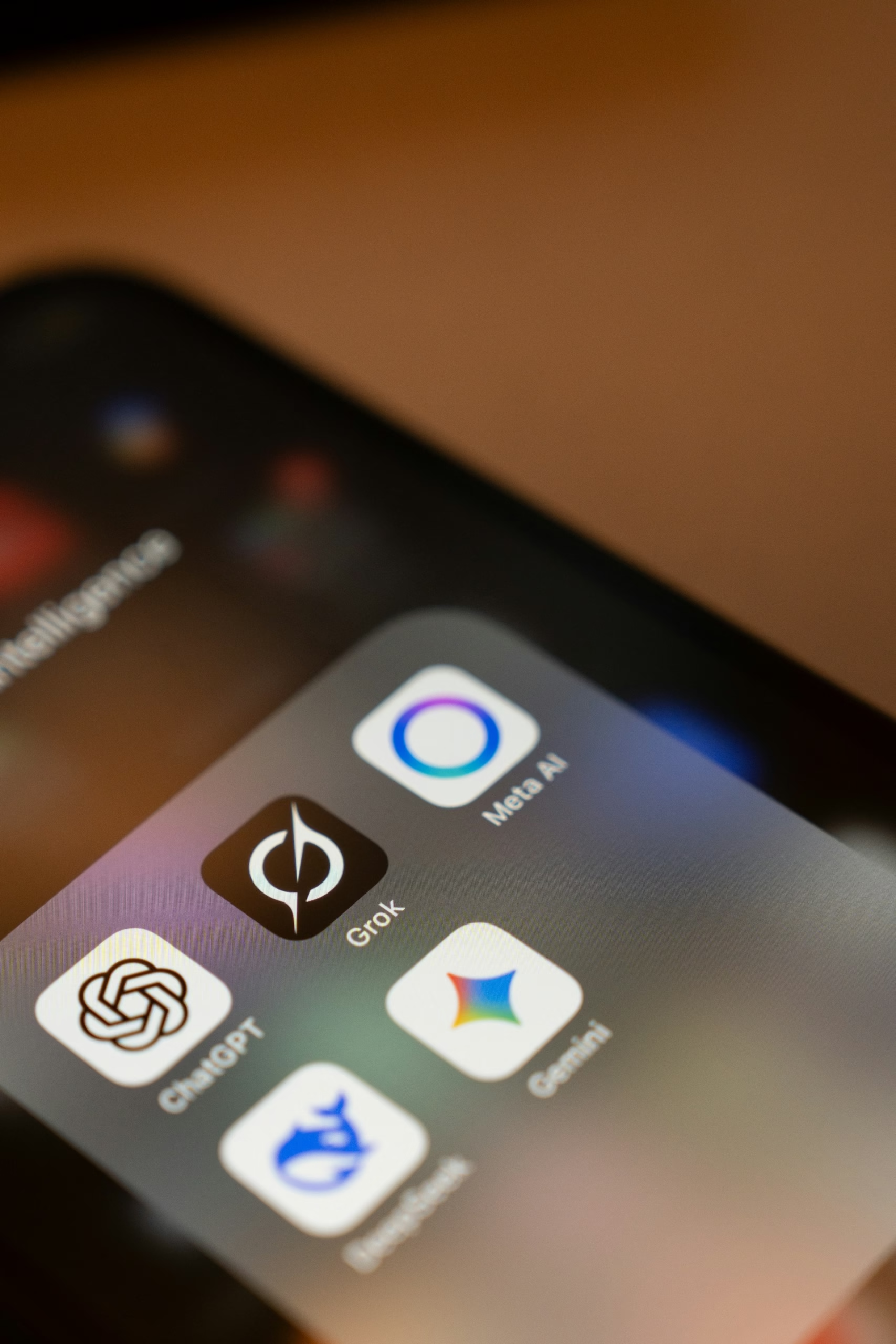
Every few years, the internet declares SEO dead. It happened when Google rolled out Panda. It happened again with the Knowledge Graph, again with voice search, and again with the first wave of featured snippets. Now, with ChatGPT answering millions of questions a day and Google’s AI Overviews sitting on top of search results, the question is back — louder than ever, and this time it sounds more credible than it has in years.
Before making the case either way, it’s worth actually answering the question honestly about what’s really changed, what hasn’t, and what that means for a business deciding where to put its marketing budget.
Is SEO Dead in 2026?
The short answer is no. What’s dying is a specific, outdated version of SEO using thin, keyword-stuffed content built to rank without actually helping anyone. Businesses that understand this difference are quietly pulling ahead while everyone else debates the headline.
Despite this, the narrative that SEO is dead keeps resurfacing, and the panic is understandable.
Clicks on plain organic listings are down on many query types, because AI Overviews and chatbots now answer straightforward questions directly on the results page. If the only measure of search health is raw click volume, the picture does look grim.
But that narrative has always meant something narrower than it sounds. Low-effort content built purely to rank for a keyword has been losing ground for over a decade. Google’s own quality updates have been chipping away at it since long before generative AI existed. AI has just made the decline more visible.
What’s Actually Changed in Search
A few things genuinely have shifted, and they’re worth naming honestly rather than dismissing:
- Zero-click answers are more common. Simple factual queries increasingly get answered directly on the results page, without a click to any website.
- AI Overviews sit above traditional listings. For many queries, an AI-generated summary now appears before the familiar ten blue links.
- A new discovery layer exists. Millions of people now start research inside a chatbot instead of a search bar.
None of this means demand for information has disappeared. It means the paths people take to find it multiplied. What hasn’t moved is the underlying behavior driving all of this: people still search because they have a question, a problem, or an intent to buy.
That intent is exactly what makes search-driven traffic more valuable than most other channels, regardless of which interface delivers the answer.
Why Your Brand Should Still Invest in SEO Now
If demand hasn’t gone anywhere, the real question becomes why SEO still deserves serious investment in an AI-shaped search environment. Here are three things that support that idea;
1. Google Pulls More Traffic than AI Tools
Despite the noise, Google still controls the overwhelming majority of global search traffic, hovering around 90% market share even after a decade of new competitors.
By some widely cited estimates, Google sends hundreds of times more traffic to websites than ChatGPT, Gemini, and Perplexity combined. AI chatbots are growing fast, and they matter, but they haven’t replaced search. They’ve added a new layer on top of it.
That distinction matters for any business deciding where to put its marketing budget. Discoverability hasn’t gone away. It’s just harder to earn on a single channel and easier to lose if a business ignores search entirely.
2. SEO Is What Gets You Cited in AI Tools Too
Here’s the part that gets missed most often in this debate. The AI tools people frame as SEO’s replacement are themselves built on the back of SEO fundamentals.
Generative engines don’t invent answers from nothing. They pull from crawlable, well-structured, authoritative content across the web.
Without solid SEO foundations, AI systems simply have nothing trustworthy to cite. If a site isn’t optimized for search engines, it’s very unlikely to be optimized for AI answer engines either, because both are reading largely the same signals.
There’s a direct financial case here too. Research tracking AI Overview citations found that brands cited inside an AI-generated answer see significantly more organic clicks, and even more paid clicks, than brands left out of the same answer entirely. Being the source an AI system trusts enough to quote is thus turning into one of the more valuable forms of visibility a business can earn, built on the same groundwork as traditional search visibility.
3. SEO Outlasts Most Other Marketing
A paid ad campaign stops generating traffic the moment a business stops paying for it.
A well-built, genuinely useful blog post or service page can keep ranking, keep getting cited, and keep bringing in visitors for years, often becoming more valuable over time as it earns backlinks, gets updated, and builds topical authority around it.
That compounding effect is nearly impossible to replicate with paid channels, which reset to zero the second the budget runs out. Ten well-built pages published two years ago can still be outperforming a campaign launched last month at a fraction of the ongoing cost.
4. Cost & Trust
Cost and trust are where the advantage becomes hardest to argue with. Leads generated through organic search convert at meaningfully higher rates than leads from cold outbound tactics like cold calls or direct mail.
In commonly cited industry benchmarks, organic search leads close around 14.6% of the time, compared to roughly 1.7% for outbound leads. That gap suggests that someone finding a business through a genuine search already has intent, and often trust, before they’ve spoken to anyone.
That trust shows up in behavior too. A large majority of users, commonly cited between 70-80%, skip paid ads altogether and go straight to organic results, because organic rankings still read as earned rather than bought. A business that shows up organically is implicitly saying “we didn’t pay to be here,” and customers respond to that, consciously or not.
What This Means for Your Business
If a business has been holding off on SEO because it feels uncertain in an AI-driven search landscape, the opposite case is actually stronger. Investing now builds the exact foundation that both search engines and AI tools reward.
It’s more cost-effective than most paid alternatives; it builds more durable trust with customers, and unlike a campaign that stops the moment the spend does, it keeps working long after it’s published.
The businesses treating this debate as a reason to pull back are quietly making room for the ones who don’t.
Not sure how to get into the SEO game? Edens Digital helps businesses build search visibility that holds up across Google and the AI tools now sitting on top of it. If discoverability matters to your growth, see our SEO and digital marketing work.
Frequently Asked Questions About SEO In 2026
Will AI replace SEO entirely?
Unlikely in the foreseeable future. AI answer engines depend on well-optimized, crawlable content to generate their responses — degrading SEO practices would degrade the quality of AI answers too. The two are increasingly interdependent rather than in competition.
Is SEO still worth it for small businesses?
Yes, arguably more than ever. It remains one of the few channels where a small, consistent investment keeps compounding rather than expiring, and it typically converts leads at a higher rate and lower cost than paid alternatives.
How long does SEO take to show results?
Most SEO investments take several months to show meaningful movement, which is exactly why the businesses that start now, rather than waiting for more certainty, end up with the biggest head start.