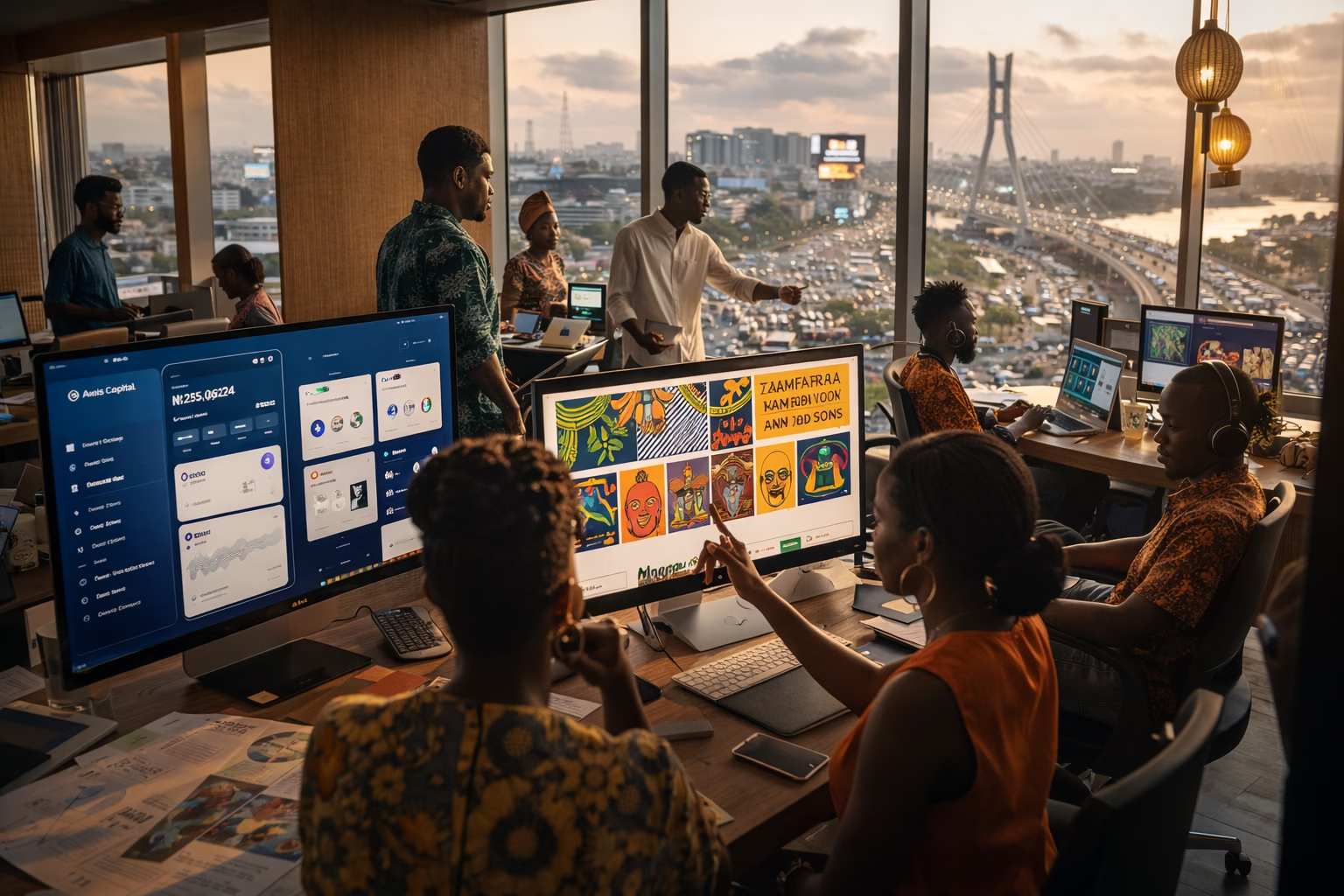
You have about seven seconds to make an impression. In Lagos traffic, you have maybe three.
The Nigerian market is arguably the noisiest in Africa. Almost every day, a new fintech app launches. Every hour, a new fashion vendor posts on Instagram. If your brand looks like everyone else’s, you will go unnoticed.
Global marketing reports are talking about Purpose-Driven Branding and AI Personalization. But what does that actually mean for a business owner in Ikeja or Abuja?
We analyzed the market shifts, looked at our own client data, and identified the specific branding trends in Nigeria that are moving the needle right now.
Top 6 Branding Trends in Nigeria to Watch Out For
What are these latest branding trends in Nigeria, and how can you leverage them to build faster in 2026? Let’s find out
1. The Rise of Heritage Branding
For years, branding for Nigerian startups meant looking as Western as possible. Everyone wanted the sterile, Silicon Valley blue-and-white look. That era is over.
One of the most powerful branding trends in Nigeria for 2026 is the unapologetic use of African identity. We are seeing a move away from generic minimalism toward Heritage-Driven design.
What It Looks Like
- Patterns: Using bold, Ankara-inspired motifs in web backgrounds (subtly, not loudly).
- Typography: Using fonts that feel handcrafted and bold, reminiscent of 70s Lagos nightlife posters.
- Voice: Using Nigerian English intelligently. It’s okay to say “We move” in your copy if your audience is Gen Z.
A classic example of heritage branding in contemporary times is that of Look at Guinness Nigeria. Their “Made of Black” campaign wasn’t just an ad; it was a cultural stake. They stopped trying to look like an Irish beer and started acting like a Nigerian icon. Newer brands like Kairos Hub are doing this too, using warm, earthy tones that feel like home, not a cold London office.
2. Radical Transparency
Trust is the most expensive currency in Nigeria. Between internet fraudsters and failed banks, the average Nigerian customer is skeptical by default.
This has led to the rise of radical transparency as one of the most critical branding trends in Nigeria. Brands are no longer hiding behind corporate barriers; they are putting their receipts on the table.
How to Execute This
Well, let’s look at PiggyVest for a minute. They didn’t become a giant just because of their app; they won because of their transparency. When they send their Money Matters reports or explain exactly how interest is calculated, they build trust.
Actionable Step: Your “About Us” page shouldn’t just have a vague mission statement. It needs photos of your office space/warehouse, your CAC certificate, and your team’s real faces.
We saw this firsthand: We recently audited a logistics client. We added a “Meet the Dispatchers” section to their homepage and published their delivery success rates (even the bad ones). Conversion rates went up 18%. Why? Because it proved they were real.
3. Tech Minimalism
While lifestyle brands are going Heritage, the financial and tech sectors are doubling down on functional minimalism.
But be careful. This isn’t boring minimalism. With data costs high, branding trends in Nigeria are favoring lightweight, fast-loading visuals that signal reliability.
Look at Moniepoint or Kuda.
- Moniepoint uses a very specific shade of blue and vast amounts of white space. Why? Because their terminal is a tool for business. It needs to look efficient, not artistic.
- Kuda uses simple illustrations and purple accents. They don’t clutter the screen.
The Lesson: A cluttered website feels risky to a Nigerian user. A clean, simple site feels secure. If you are in fintech or real estate, clutter is your enemy. (Is your site too cluttered? Check our Web Design Services for a cleanup)
4. Nostalgia Marketing
76% of consumers are more likely to buy products that make them feel connected to a positive memory. In 2026, branding trends in Nigeria are tapping heavily into the 90s and early 2000s.
Indomie recently revived its classic Mama Do Good campaign. They didn’t just run an ad; they reactivated a core memory for millions of Nigerians who grew up singing that jingle. You don’t have to be a 20-year-old brand to do this.
You can use:
- Sound: 8-bit game sounds or “Old Nollywood” audio clips in your TikTok ads.
- Visuals: Filtered photos that look like film cameras.
It stops the scroll because it feels like an old friend, not a cold corporation.
5. The Micro-Tribe Strategy
The era of the General Audience is dead. One of the defining branding trends in Nigeria this year is building Micro-Tribes.
Nigerians love community. We have WhatsApp groups for everything: estates, alumni, churches, asoebi. Name it. Smart brands are tapping into this by moving customers from followers to community members.
The Strategy: Don’t just build an email list. Build a WhatsApp community where you drop exclusive offers. This is a core part of our Social Starter Offer, where we set up these automation channels for you.
6. Strategic Underconsumption Messaging
This is a global trend that has hit Nigeria hard due to the economy. The “Underconsumption Core” trend focuses on buying less, but buying better.
For luxury and high-ticket brands in Ikoyi and Maitama, the messaging has shifted.
- Old Way: “Buy this because it’s flashy.”
- New Way: “Buy this because it lasts.”
Your branding needs to signal durability. If you sell furniture, don’t just show the design; show the wood quality. Show the joint work. Prove that this N500,000 sofa will last 10 years.
How to Apply These Trends to Your Startup
You can’t chase every trend. If you try to be “Heritage,” “Minimalist,” and “Nostalgic” all at once, you will confuse your customers.
You need a strategy that fits your specific niche.
When we handle branding for Nigerian startups, we don’t just pick colors. We look at the market gap. We ask: “Where is the trust deficit? And how can design fix it?”
That is the core of our LaunchPad package. We don’t just register your business with the CAC; we build a brand identity that uses these specific branding trends in Nigeria to position you as a market leader from Day 1.
Ready to Launch the Right Way?
Stop struggling with disjointed vendors. Get your business legal, branded, and ready to sell in one smooth process.
Check out our Launchpad package.