
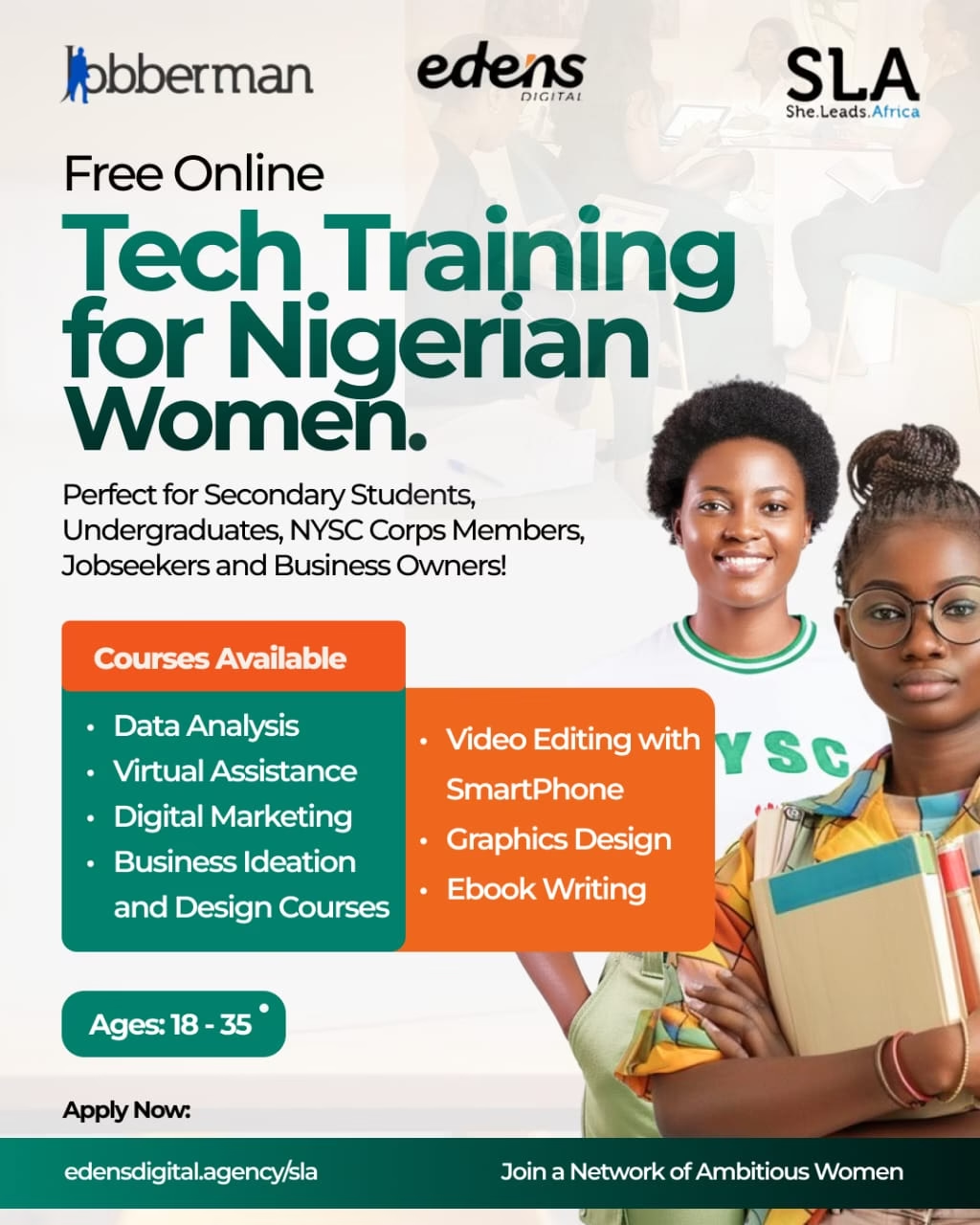
Some milestones are easy to celebrate and harder to explain. The SLA BoostHer program has now passed 20,000 verified signups, and the messages that keep arriving from participants are the clearest evidence that those numbers represent real people making real progress. We are still working toward the program’s target, and we are confident we will reach it.
As marketing partners to She Leads Africa (SLA) and Jobberman on this free digital skills training for women in Nigeria, we have had a close view of how the campaign worked, what participants responded to, and what we would tell any organization planning a similar registration drive.
This article sets out the milestone, the thinking behind the campaign, and the lessons we think travel well beyond a single program.
What the SLA BoostHer Program Offers
The SLA BoostHer program is a free tech training initiative for Nigerian women aged 18 to 35, run by She Leads Africa in partnership with Jobberman, with Edens Digital as marketing partner. It combines self-paced online learning, live masterclasses, and in-person community meetups.
Why Digital Skills Training for Women Needs Access, Not Just Content
Nigeria’s job market is demanding for early-career professionals, and many entry-level roles ask for experience that newcomers do not yet have. For small business owners, the cost of digital services keeps rising. The gap between wanting to succeed and having a marketable skill is one of the most practical barriers young women face.
Iquo Oyekunle, Head of Operations and Programs at She Leads Africa, has described the program’s purpose as removing cost as a barrier to learning, so that women can gain skills without finances deciding whether they can take part.
For digital skills training for women to work at scale, cost, clarity, and support all have to be addressed together.
Two Tracks for Two Ambitions
Rather than offering one generic course, the program lets participants choose the path that matches their goal:
- The Career Path, for job seekers, undergraduates, and people targeting remote work, covering Data Analysis, Virtual Assistance, Digital Marketing, and Interview Prep and Career Aptitude
- The Business Owner Path, for side hustlers, creatives, and aspiring founders, covering Smartphone Video Editing, Brand Identity and Strategy, and E-Book Writing
The program combines self-paced online study with live masterclasses and in-person community meetups. That structure matters, because it adds accountability and human contact to what would otherwise be a solitary exercise.
How the Campaign Reached 20,000 Verified Signups
A large number is not a strategy. Several deliberate choices shaped how the SLA BoostHer program was presented and how people moved from curiosity to a completed registration.
1. Meeting People Where They Already Are
The single most effective principle in this campaign has been to go to audiences that already exist instead of trying to build one from nothing. Our leading source of leads has been connecting with existing job boards and communities that already serve the audience, and cross-posting the program to them with a direct route to the landing page. These are places where young Nigerian women are already searching for jobs, internships, and skills, so the program arrives as a relevant opportunity and not as an interruption.
Three ideas explain why this works so well:
- Trust transfer. Research on consumer trust shows that confidence in one source can transfer to another it vouches for. A program shared by a community or job board people already rely on borrows some of that credibility before the reader has even opened the page.
- Context matches intent. A person browsing a job board is already motivated to improve their career prospects. In B.J. Fogg’s behavior model, behavior happens when motivation, ability, and a prompt coincide, and an invitation placed where motivation already exists is far more likely to be acted on.
- The strength of weak ties. Sociologist Mark Granovetter showed that information travels furthest through the loose connections between groups. Each community that shares the program extends its reach into networks the campaign could not have reached directly.
The practical lesson is that distribution is a partnership exercise. Identifying who already serves your audience, and giving them something worth sharing, often outperforms building reach from scratch.
2. A Clear Audience and a Specific Offer
The campaign spoke to a defined group, Nigerian women between 18 and 35, and broke that group into recognizable identities: students, graduates, entrepreneurs, and career switchers. The creatives also reflected this demographic. Every participant could see themselves on the page within seconds.
Additionally, the offer was concrete, with information freely provided about free training, a choice of tracks, and a clear route to job-ready or business-ready skills, framed around learning what pays.
3. A Landing Page Built to Convert
The landing page was designed to remove uncertainty at every step. It explained the program, stated eligibility and cost up front, and laid out registration as four simple steps. It also answered the most common objections before anyone had to ask. Repeated, consistent calls to action meant a visitor was never more than a scroll away from registering.
4. Counting Verified Signups, Not Clicks
We report verified signups because raw sign-up counts are easy to inflate and easy to misread. Each signup was verified using data from SLA’s own records, and because participants could enroll in more than one course, each person was counted once. The figure therefore reflects unique registrants, not course enrollments.
The economist Charles Goodhart observed that when a measure becomes a target, it stops being a good measure. A campaign optimized for clicks or form submissions can look successful while delivering people who never engage. Counting verified, unique signups keeps attention on genuine participants, which is the number that matters to the program and to the people it serves.
5. A Community That Starts Before the First Lesson
One difference in how we approached this campaign was that registration was not the end of the relationship. Participants who registered through our link were invited into a support community where our team answered questions, helped with technical difficulties, shared job and internship opportunities related to the skills being learned, and kept learners connected.
What Participants Are Saying
The best proof of impact is what participants say in their own words. These messages came directly from participants, and we share a selection here attributed by track.
A graduate of the Executive Virtual Assistant track wrote that she had received her certificate and was happy to be part of the community now. A video editing student called it “the most interesting and informative course I’ve taken so far.” A participant from the Brand Design and Strategy track thanked the support team for “always responding to questions.” Another graduate wrote that the program had given her “a new sense of confidence to pursue my career.”
Across the messages, a few themes recur:
- Certificates matter. Many participants lead with the moment they received their certificate, a visible marker of completion they can show employers and clients.
- Confidence is a real outcome. Several describe feeling more able to pursue their careers, beyond the technical skills themselves.
- Support is noticed. Participants specifically thank the people who answered their questions along the way.
- Learners are looking ahead. Some graduates say they are now open to internships and hands-on opportunities, which is exactly the next step the program aims to make possible.
Lessons for Organizations Running a Registration Campaign
The same principles apply to training providers, nonprofits, universities, and community programs.
1. Go Where Your Audience Already Gathers
Before building new channels, map the job boards, communities, and networks that already serve your audience, and work with them. Borrowed trust and existing intent shorten the path to a registration.
2. Define the Conversion That Matters
Decide what counts as success before launching. A verified, unique signup is a stronger signal than a click, and a completed course is stronger still. Measure the stage that reflects genuine value.
3. State Eligibility, Cost, and Benefits Clearly
Uncertainty is the quietest conversion killer. People should know in seconds whether the program is for them, what it costs, and what they will gain.
4. Make the Path Visible
Showing registration as a short sequence of steps reduces perceived effort and anxiety. A clear path lowers the ability barrier in Fogg’s model.
5. Segment at the Point of Signup
Asking registrants to identify their status and choose a track serves two purposes. It helps them find the right content, and it gives the organization useful information for support and follow-up.
6. Build Community Before the First Lesson
Start the relationship at registration. Support groups, peer accountability, and responsive help turn sign-ups into participants and participants into graduates.
7. Close the Loop With Proof
Collect and share genuine feedback. Participant stories build trust with future applicants and give partners evidence of impact.
8. Look Beyond the Sign-up
Track completion, certification, and onward outcomes such as internships and jobs. The signup is the beginning of the result, not the result itself.
The Bottom Line
Passing 20,000 verified sign-ups is a milestone worth marking, and we are proud to have played a part in it alongside She Leads Africa and Jobberman. The work continues, and we are confident of reaching the program’s target.
If you are interested in the program, you can find the details and register to join our community through the SLA BoostHer program page. If you run a training program, a community initiative, or an organization that needs actual registrations, this is work we do regularly, and we are happy to help you plan it.
Frequently Asked Questions
What is the SLA BoostHer program?
The SLA BoostHer program is a free tech training initiative for Nigerian women aged 18 to 35, run by She Leads Africa in partnership with Jobberman. It combines self-paced online learning, live masterclasses, and in-person community meetups.
Is there free digital skills training for women in Nigeria?
Yes. The SLA BoostHer program offers free digital skills training for women aged 18 to 35 across two tracks, one for careers and one for business. Check the program’s landing page for current availability.
What does Edens Digital do in the SLA BoostHer program?
Edens Digital is a marketing partner on the program. We run the registration campaign and landing page, connect the program with job boards and communities that already serve its audience, and support participants through a community where learners can ask questions and receive job and internship opportunities.
Who can join the SLA BoostHer program?
The program is for Nigerian women between 18 and 35, including students, graduates, entrepreneurs, and career switchers.
Is the SLA BoostHer program free?
Yes. Participation is free, and the program is funded by its partners.
Which skills does the SLA BoostHer program teach?
The Career Path covers Data Analysis, Virtual Assistance, Digital Marketing, and Interview Prep and Career Aptitude. The Business Owner Path covers Smartphone Video Editing, Brand Identity and Strategy, and E-Book Writing.
What are verified signups?
Verified signups are registrations confirmed as genuine using data from SLA’s records. Because participants can take more than one course, each person is counted once, so the figure reflects unique registrants.
How can an organization run a registration campaign like this?
Start by going where your audience already gathers, such as existing job boards and communities. Then define the outcome that matters, state eligibility and benefits clearly, make the registration path simple, segment registrants at signup, and build a support community from the start. We can help plan and run campaigns of this kind.


